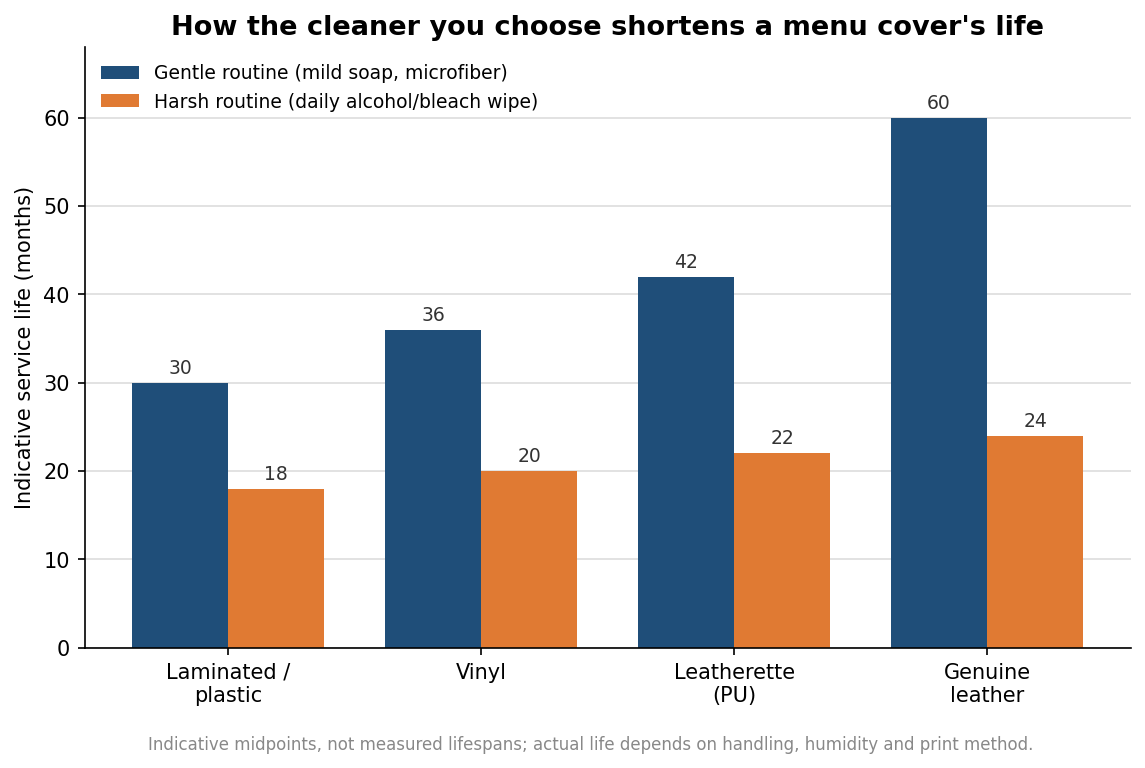
The disinfectant that protects your guests is often the same thing that destroys your menu covers. A cover that gets wiped with a bleach spray or a straight alcohol pad several times a day will look tired in months, not years, and the print is usually the first thing to go. The fix is not to clean less. It is to match the cleaner to the material, and to separate the quick between-guests wipe from the deeper clean that actually resets the surface.
This guide walks through both routines and then goes material by material, because a laminated plastic panel, a coated vinyl cover, a leatherette (polyurethane) folder and a genuine leather book each want something different. Getting this right is the cheapest durability upgrade you will ever make, since it costs nothing beyond choosing the correct bottle.
The quick wipe and the deep clean are two different jobs
Most damage comes from treating every clean like a disinfection event. For high-touch service, a between-guests wipe only needs to remove visible soil and knock down surface germs: a soft microfiber cloth, lightly dampened, and where a sanitizer is required, a 70% alcohol wipe used briefly rather than soaked on. Wipe in the direction of any grain, let it flash off, and move on. Reserve the deep clean for the end of a shift or a slow afternoon: warm water with a drop of mild dish soap, a well-wrung cloth, then a second pass with a clean damp cloth to lift any soap film, and full air drying before the cover goes back into rotation.
Frequency depends on touch, not on the calendar. A busy diner passing covers through hundreds of hands a day should plan on a between-guests wipe every turn and a deep clean daily. A fine-dining room that presents a menu a handful of times per table can deep clean weekly and spot clean as needed. The mistake is letting food oils and hand lotion build into a haze, because once that film sets, people reach for something stronger, and stronger is what shortens the cover’s life.
Match the cleaner to the cover material
Laminated and rigid plastic covers are the most forgiving surface in the dining room. They tolerate warm soapy water, most sanitizing wipes and an occasional 70% alcohol pass. Their weak point is not the face but the edges and seams, where liquid wicks in behind the lamination and lifts it. Keep water away from cut edges, never soak them, and dry the perimeter first.
Coated vinyl behaves similarly and is built for volume service. Mild soap and water is the everyday answer. It handles brief alcohol sanitizing better than leather does, but repeated saturated alcohol still hazes the topcoat over time and can dull a printed logo, so treat alcohol as an occasional tool rather than the default.
Leatherette, the polyurethane material most custom covers are made from, wants the gentlest realistic routine: a barely damp microfiber cloth with a little mild soap, wiped and then dried. Avoid solvents, avoid scrubbing at a stain, and blot spills quickly before they sit. Leatherette does not need conditioner the way hide does; oils and “leather” creams can leave a tacky residue that then grabs dust.
Genuine leather is the most rewarding and the least tolerant of harsh chemistry. Dust it, wipe occasional marks with a slightly damp cloth, and condition it a couple of times a year with a product made for finished leather. What it cannot take is alcohol, which strips the finish and dries the hide until it cracks. If a leather cover must be sanitized, wipe quickly with the mildest effective product, dry it, and re-condition on schedule rather than trying to soak the surface clean.
What quietly destroys menu covers
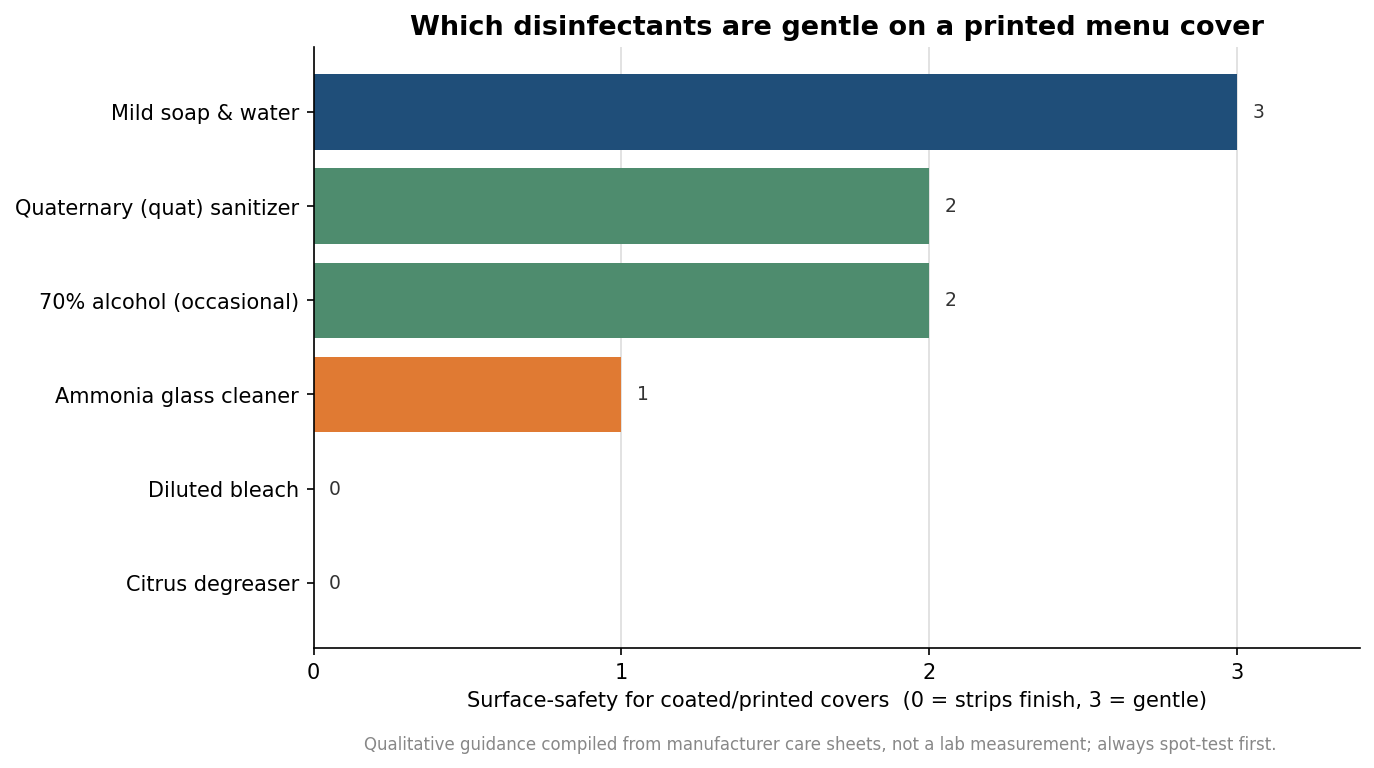
A handful of habits account for most premature replacements. Bleach and ammonia glass cleaners strip coatings and fade print with repeated use. Citrus degreasers and other solvent-heavy sprays cut oils beautifully and take the finish with them. Abrasive pads and “magic” eraser sponges physically sand the topcoat, leaving a dull patch exactly where the light hits. Soaking anything, or letting water pool at a seam, breaks the bond between layers. And heat from a dishwasher, a hot line or a sunny window sill will warp and yellow plastics and dry out leather. If you take only one rule from this section, make it this: never spray cleaner directly onto the cover. Spray the cloth, wipe the cover, and you avoid the pooling and overspray that do the real harm.
How your cleaning routine shows up in the budget
Cleaning choices are really a replacement-cost decision in disguise. The same cover can last two to three times longer under a gentle routine than under daily harsh wiping, which means the line item you notice, reordering covers, is partly set by the bottle you keep at the host stand. When you compare cleaners, weigh the modest cost of mild soap and 70% alcohol against the cover you would otherwise replace early, and the math favors gentleness every time.
A practical setup for most rooms is three things within reach: a stack of clean microfiber cloths, a spray bottle of warm water with a trace of mild dish soap for deep cleans, and a tub of 70% alcohol wipes for sanitizing when it is genuinely required. Keep bleach, ammonia, citrus degreasers and abrasive sponges away from the covers entirely. Spot-test any new product on a corner or a spare cover before you commit, because finishes and print methods vary, and the corner is where you want to discover a problem, not the front panel a guest is holding.
Handled this way, sanitizing and longevity stop being in tension. Guests get a clean, presentable menu every time, and you get covers that reach the end of their design life instead of aging out early because the wrong spray sat within arm’s reach.